


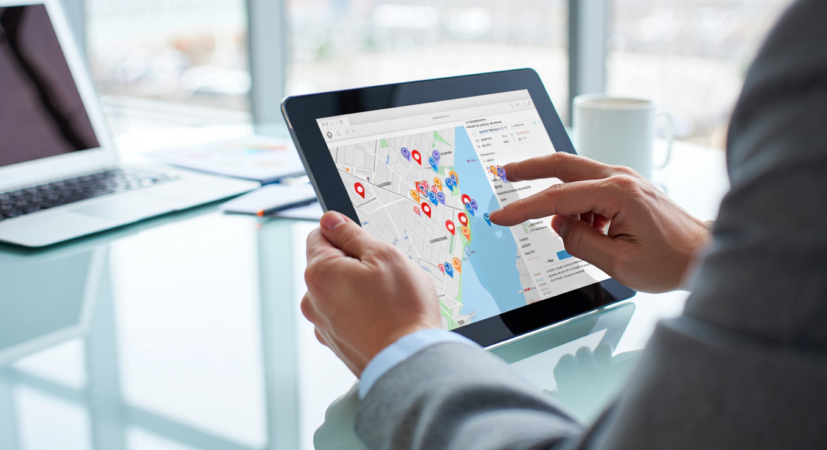
Field sales is still where many B2B deals are shaped. Yet, selling in the field is being made harder by longer buying cycles, larger buying committees, and tighter accountability. That is why B2B field sales tracking is being treated as a core capability, not an add-on. When a reliable field sales tracking app is used, visit proof, travel patterns, and follow-ups are being captured consistently, even when teams are spread across territories.
In many industries, buyers are also being reached through multiple channels before a meeting is accepted. Research has shown that B2B buyers spend only a small portion of their time with suppliers during a purchase journey, which makes every on-ground interaction more valuable. Because of that, better visibility is being demanded from sales leaders, while field reps are being asked to spend less time on manual reporting.
Why B2B field sales is still difficult to manage
Several challenges tend to be faced together in B2B:
- Multiple stakeholders are involved, so follow-ups are being missed when notes are scattered.
- Travel time is being wasted when routes are not planned well.
- Pipeline hygiene is being damaged when updates are delayed until end-of-day.
- Visit authenticity is being questioned when only phone calls are used for supervision.
- Managers are being forced to coach based on “stories,” not data.
These gaps are usually not solved by a basic CRM alone. Instead, a field force tracking solution is needed, where field movement, visit actions, and outcomes are being connected to the sales pipeline.
What should a smart field force tracking solution include?
A modern field staff tracking software is expected to do more than show dots on a map. The following capabilities are usually required in B2B:
GPS visibility that supports real selling
With gps employee tracking, routes are being recorded and travel patterns are being understood. Still, it should be remembered that location is only useful when it is tied to sales work. Therefore, location trails should be connected to check-ins, client records, and tasks. Otherwise, tracking is being seen as surveillance, not productivity support.
Geo fences that make territories measurable
With geo fencing, boundaries around branches, client sites, or territories are being created. As a result, a visit can be validated automatically when a rep enters or exits a defined area. It also becomes easier for exceptions to be flagged, because repeated out-of-territory time is being noticed early. In addition, geo fencing is often used to reduce false attendance claims.
A sales activity tracker that is built for field reality
A true sales activity tracker is expected to capture what happened, not just where someone went. So, meeting outcomes, next steps, samples, competitor notes, and follow-up dates should be logged quickly. When the same sales activity tracker is used across the team, coaching is being based on comparable activity data, not assumptions.
Remote attendance that is audit-friendly
Field teams rarely start the day at the office. Because of that, remote attendance is being adopted widely. When remote attendance is combined with location-based check-in and time stamps, attendance records are being made cleaner for payroll and compliance. It also becomes easier to spot late starts and early exits without constant phone calls.
Sales reporting that is automatic, not manual
A dedicated sales reporting app is expected to convert daily activity into dashboards. Visits, follow-ups, orders, collections, and expenses should be summarized without spreadsheets. When a sales reporting app is set up well, daily reviews are being shortened, and weekly business reviews are being improved with trend data.
Key questions that should be asked before rollout
The right questions can prevent a failed implementation:
Which activities must be tracked to improve revenue, not just visibility?
KPIs should be selected first. Then tracking fields are to be configured. Otherwise, noise is being collected.
How will visit proof be captured without slowing reps down?
Fast check-in/check-out flows are needed. Photo or note capture is often used, but it should be kept simple.
Will privacy concerns be handled transparently?
Clear policies should be documented. Location tracking windows should be defined. Trust is built when expectations are stated upfront.
How will the data be used for coaching?
If dashboards are only used for policing, adoption is being reduced. When insights are used for route help, lead prioritization, and skill coaching, acceptance is being improved.
A practical example: where tracking fixes a real B2B problem
Consider a distributor sales team that is covering 40–60 accounts per rep each month. Without a system, missed visits are being discovered late, and collections are being delayed. With a sales employee tracking app, daily check-ins are being linked to each account, while follow-ups are being assigned immediately after a meeting. As a result, the manager is being shown which accounts have not been touched in 14 days, and which routes are causing travel overload.
In the same flow, expenses are being attached to trips, and a sales reporting app is producing an end-of-day summary automatically. Because fewer hours are being spent on manual reporting, more time is being kept for selling.
Where Twib fits as the “smart tracking layer”
A single platform is often preferred, so data is not split across tools. That is where Twib can be considered as a practical option. Features like visit tracking, gps employee tracking, geo fencing, tasks, lead & client management, expenses, order & collection, and performance analytics are provided in one environment, so field execution is being connected to outcomes.
Instead of being treated as only a tracker, a field sales tracking app like Twib can be used as a lightweight sales CRM plus a daily execution system. With that approach, adoption is usually increased because reps are being helped with their workflow, not burdened with extra steps. For teams evaluating a scalable field staff tracking software, Twib can be explored at https://twib.online.
Conclusion
B2B growth is rarely blocked by effort alone. Visibility gaps, delayed updates, and weak follow-ups are often the real issues. With B2B field sales tracking, the right data is being captured at the right time, and decisions are being made faster. When remote attendance, geo fencing, a sales activity tracker, and a reliable sales reporting app are combined, a field team is being managed with clarity, not guesswork.
If a single field force tracking solution is being looked for to improve accountability and sales execution without heavy admin work, Twib should be tried. A smarter routine can be started by setting up the team on Twib and letting daily field work be tracked automatically.